Retina and iris scans seem like something out of a super spy movie. And yes, the government does use these for security purposes. Jump into the world of Austin Powers and find out how it all works!
Windows to the Soul?
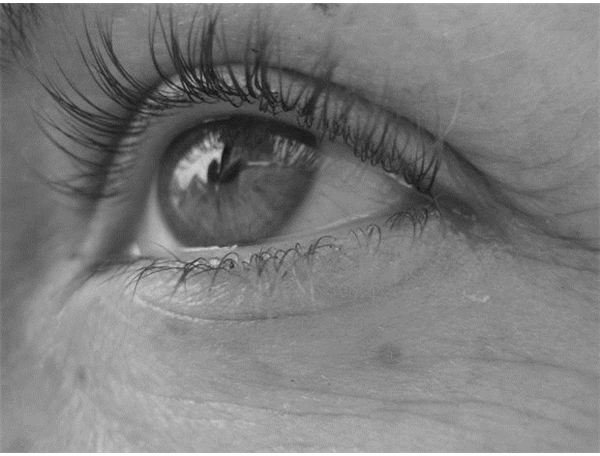
Scans of the retina can verify a person’s identity, and they’re so accurate the government use of retina scans for security areas is becoming more the norm than not.
According to Truth It, scans are completed in two stages. There is the initial scan and an authentication scan.
Another website, Medical Discoveries, talks of initial scans: “The scanner measures this (retina) reflection at 320 points along the beam path. It then assigns an intensity grade between zero and 4,095.” Once the results are compressed, the initial scan is placed in a database.
Truth It says that “initial scans take a minimum of five scans and last approximately 45 seconds; subsequent authentication scans are faster and take only 10-15 seconds.”
According to some experts, however, iris scans may be the choice for the future because they are just as accurate and less intrusive.
Security Purposes
When looking at security, many agencies use scans including the Federal Bureau of Investigation (FBI), Central Intelligence Agency (CIA), and even the NASA space program.
Using a retina or iris scan to verify someone’s identity is not only accurate for secure areas of government organizations but can also be used to determine one’s security or accessibility levels.
State governments are also jumping on the eye scan security wagon. In Illinois, for example, the Cook County Prison system uses scans to identify and keep track of inmates.
Some US states that border Mexico, such as Arizona with its new immigration law, argue that retina or iris scans should become a database much like a felony DNA database so border patrol agents can tell who is legal to enter the country and who is not. This premise doesn’t have many fans, however, as many feel it is a violation of one’s civil rights.
The Future
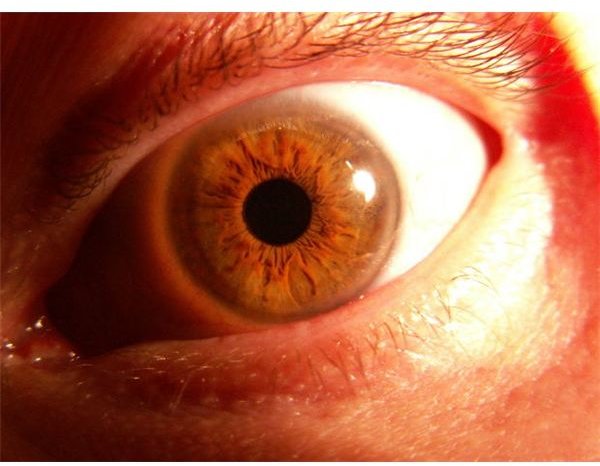
As government use of retina scans for security becomes more and more widely used in agencies beyond the FBI and CIA, this biometric field of verifying identities is being used in other countries. In some Asian countries, scans are used in automatic teller machines (ATMs), something that is making bank customers feel more secure about their personal banking.
After the terrorist attacks of 9/11, other US agencies have implemented retinal scans including the DOD or Department of Defense and the Treasury Department. Much the same as secure water systems were put in place in US government agencies after 9/11, in the future, due to terrorism, expect even more government-controlled entities to implement retina scanning.
Technologies grow, it seems, each year; and governments, companies, and individuals want and seek ways to be more secure and fear identity theft at many levels. For these reasons alone, retina scans and security will surely go hand in hand in the future.
References
Truth It: Retina Scan Good for Public Safety?
DiscoveriesInMedicine.com: Retinography
Image Credits:
Eye - MorgueFile/biberta
Norway - MorgueFile/michaelponton